
Theme: Entrepreneurship for Sustainability
EDHE Studentpreneurs Indaba 2025
#EDHEStudentpreneursIndaba2025 #EDHE #SustainableEntrepreneurship
The EDHE Studentpreneurs Indaba and Lekgotla form the flagship conference of EDHE and will this year be hosted under the theme Entrepreneurship4Sustainability. The conference brings together students, academics, researchers, civil society, public and private organisations. The conference is aimed at fostering dialogue and showcasing best practices around supporting and advancing entrepreneurship development across the 26 public universities in South Africa.
The EDHE Studentpreneurs Indaba and Lekgotla form the flagship conference of EDHE and will this year be hosted under the theme Entrepreneurship4Sustainability. The conference brings together students, academics, researchers, civil society, public and private organisations. The conference is aimed at fostering dialogue and showcasing best practices around supporting and advancing entrepreneurship development across the 26 public universities in South Africa. The conference will attract 250 students and 100 academics for the Indaba and 350 academics, practitioners and industry partners and will boast keynotes, panel discussions, and parallel sessions made up of workshops, poster presentations, and think tanks from thought leaders. It will include a design thinking workshop and quest visits to startups and businesses for students, a gala welcome dinner for participants and a marketplace to display student startups and showcase university projects. The 8th annual EDHE Studentpreneurs Indaba will be held Monday, 6 October and Tuesday, 7 October 2025, with 2025 anchor sponsor Absa. This will run in conjunction with the 8th EDHE Lekgotla, which will take place on Wednesday, 8 October, and Thursday, 9 October 2025. The host university for 2025 is the University of South Africa (UNISA) at their Pretoria Campus.
Entrepreneurship holds immense potential for sustainability and economic growth, fostering innovation, job creation, and addressing societal challenges, while also promoting sustainable practices and responsible business models. Universities are key actors in creating vibrant entrepreneurship ecosystems for sustainable prosperity and development. Noting that university ecosystems do not exist in a vacuum, it is necessary and valuable to connect and collaborate with academia, the private and public sectors, investors, and startup communities, as well as international actors in the entrepreneurial ecosystem.
The effective facilitation of this event requires alignment with these key objectives:
- To provide an engaging platform for leaders of entrepreneurship in Higher Education
- To amplify and support the work of the EDHE Communities of Practice for Student Entrepreneurship, Entrepreneurship in Academia and Entrepreneurial Universities
- To showcase support for businesses and organisations for entrepreneurship in Higher Education
- To provide a learning platform and voice for student entrepreneurs; and
- Facilitating collaboration with local and international stakeholders.
Statistics South Africa (2025) reported South Africa’s youth unemployment rate in the first quarter of 2025 to be 46.1%, with the graduate unemployment rate climbing alongside. This growing threat in our socio-economic environment is met with the opportunity of Africa having a growing youth population, with 70% of sub-Saharan Africa under the age of 30 (United Nations, 2024).
Africa, like many parts of the world has may challenges that need to be resolved, which the 17 United Nations Sustainable Development Goals (UN SDGS) aim to address by 2030. Aligned with these global targets, South Africa created its National Development Plan 2030. These goals are equally echoed and contextualised to Africa through the African Union Agenda 2063. Synergies exist across these goals with a continuous focus on job creation, education, and economic development, with sustainability echoed in the forms of green and blue economies. Sustainability in the context of the conference makes room for applications to speak to the different aspects of the SDGs, with EDHE’s key focus on SDG 8: Decent work and economic goals and SDG 17: Partner for the goals, with a ripple effect impacting on SDG 4: Quality Education and SDG 5: Gender Equality.
In addition to these mandates, research denotes that the relationship between early-stage entrepreneurial activity and sustainability is positive and symbiotic. New businesses can promote sustainable development goals by generating economic value-added and jobs without depleting resources or exploiting individuals or communities. The GEM 2023/24 Entrepreneurship and Sustainability Report highlights how early-stage entrepreneurs perceive their actions in relation to their social and environmental impacts, how they claim to incorporate these impacts into their long-term strategies, and whether they prioritise sustainability over profitability or growth. The report also highlights the motivation to become entrepreneurs that GEM describes as “making a difference in the world”.
Finally, as the global political climate changes, more developed nations are looking to Africa (Microsoft, 2025), key funders have withdrawn from South Africa (DIRCO, 2025; MSME Africa, 2025) and there’s a rise in impact investing (CNBC, 2025) and venture capital deployed (Innovate UK KTN, 2025) across the continent. Aligned to an increased focus on ESG reporting, the ongoing relevance and value of which is seen in the FTSE/JSE Responsible Investment Top 30 Index, which comprises stocks with the highest ESG Ratings and is equal weighted JSE Impact (JSE, 2025).
The aforementioned polices and initiatives indicate an environment that seeks to address environmental and social challenges, thus placing sustainability at the forefront. Connected to its mandate, EDHE Lekgotla and Studentpreneurs Indaba will focus on Sustainability for Entrepreneurship, speaking to elements of:
- Sustainable Innovations (green, blue and circular economies)
- Social Entrepreneurs (innovating to address social challenges)
- Sustainable Investment (funding for venture or innovation sustainability)
- Sustainable Universities (the university entrepreneurial ecosystems)
- Advancement through Technology (AI, 4IR, Blue Tech and Digitisation)
In alignment with current initiatives aimed at supporting the development of entrepreneurial universities in Africa, the intention is to include universities from countries across the continent to participate, thus expanding the benefit of the event to a larger audience. Leaders and stakeholders from South Africa and other African countries with an interest in entrepreneurship in the Higher Education sector are likely to benefit from participating in the EDHE Lekgotla 2025.
The hybrid event will take place at various locations on the UNISA campus, and each of the plenary sessions will be live-streamed to the EDHE YouTube and Facebook pages. Each of the parallel sessions will have note-takers and a rotating media crew to capture footage and images. The sessions will comprise of keynotes, panel discussions, think tanks, workshops and presentations.
Universities South Africa (USAf) is a non-profit membership organisation representing 26 South African public universities. The USAf Board comprises all 26 Vice-Chancellors of public universities and the USAf CEO. USAf, through lobbying, advocacy, and capacity strengthening, promotes and facilitates prime environments for universities to function effectively and contribute to the social, cultural, and economic advancement of South Africa.
USAf concerns itself with the upkeep of a healthy state of the higher education system of South Africa, and the advancement of the system on the continent and in the world. It regards universities as ‘central to the building of competitive economies’ through knowledge-production; production of human resources and high-end skills; contribution to the sustenance and deepening of democracy through their cultivation of intellectual culture and building of critical citizenry. USAf is committed to the promotion of strategically planned entrepreneurship development through the Entrepreneurship Development in Higher Education (EDHE) programme, as a comprehensive response to advancing and strengthening entrepreneurship development in the entire sector.
EDHE’s mandate is to capacitate and strengthen entrepreneurship development in the higher education sector through staff development, student development and curriculum and policy development as a response to graduate unemployment as articulated in the National Plan for Post-School Education and Training 2021-2030 (see https://edhe.co.za/). The entrepreneurship support and development that EDHE is developing is not just a reaction to unemployment, but an enabler of economic development and social progress. A more positive view would see the development of capable, well-educated and skilled citizens who can compete in a sustainable, diversified and knowledge-intensive economy, which meets the development goals of South Africa.
The EDHE programme, which is implemented in partnership with the Department of Higher Education and Training (DHET), is aimed at enabling an integrated approach to capacity development across three focus areas: student entrepreneurship, entrepreneurship in academia, and entrepreneurial universities. Through the EDHE programme, a comprehensive approach is undertaken towards advancing the economic participation of students and graduates, within universities that are increasingly becoming entrepreneurial ecosystems and, simultaneously, addressing graduate unemployment and the need for growing additional income streams for universities.
To empower, enable and equip this generation to see their role as innovators, entrepreneurs, leaders, academics, researchers, changemakers, and though-leaders. In as much as the programme aims to share knowledge and inspire students, it also seeks insights from students to understand and shape the entrepreneurial university ecosystem.
The programme is designed to be engaging and empowering, inspiring the students through experiential learning and providing exposure, creating networking opportunities to strengthen their own inter-university ecosystem and allow room for their voice in the discourse on sustainability for entrepreneurship.
The success of the EDHE programme is the result of a proven two-pronged approach to achieving impact on a national scale, i.e. through activities and through purpose-built structures. The latter is the differentiating factor that encouraged the uptake of entrepreneurship development within institutions beyond what might have been achieved through short-term projects alone. In the first years of the existence of EDHE, a substantial network of champions for entrepreneurship and role players in the national university ecosystem has been established. This has taken place through strategically planned and executed national projects, along with the support of national EDHE Communities of Practice (CoPs) as participatory structures aligned with the vision and goals of EDHE. Each CoP is headed up by a chairperson and a deputy chairperson.
The existing CoPs are:
- Studentpreneurs CoP (one student entrepreneur representing each university);
- CoP for Student Entrepreneurship (university staff supporting student entrepreneurship);
- CoP for Entrepreneurship Learning and Teaching;
- CoP for Entrepreneurship Research;
- CoP for Entrepreneurial Universities; and
- CoP for Economic Activation Offices (EAOs).
The EDHE Lekgotla has taken place annually since 2017, and the Studentpreneurs Indaba since 2018. The event is always co-hosted with a partner university on a rotational basis, selected by the team. Previous co-hosts include: University of Johannesburg, University of Cape Town, Durban University of Technology, University of Pretoria, Nelson Mandela University, and University of the Western Cape. In 2020, the EDHE Lekgotla was an online event only, and since 2021, a hybrid event. In 2024, EDHE launched its first public call for proposals to co-host the 2025 conference, and following a review committee of the submissions, UNISA was nominated as the official co-host.
The University of South Africa (UNISA), a leading open, distance, and e-learning (ODeL) institution, was founded in 1873. UNISA is a globally recognised ODeL institution with over 400,000 students annually, drawing learners across South Africa and more than 130 countries. UNISA holds a strategic emphasis on innovation, research, and societal engagement, positioning them as a thought leader in higher education, entrepreneurship development, and social impact.
This initiative aligns with Absa’s Financial Inclusion Through Entrepreneurship Strategy, which seeks to pave the way for youth to take entrepreneurial action. It looks at the individual, the institutions that individuals are a part of, as well as the initiatives with which we partner to pave the way for young people to become entrepreneurs. The partnership recognises that there are key components which are required to set up thriving entrepreneurs – it’s the individual and their propensity towards entrepreneurial action, the system that supports the individual (higher education and training institutions), the content they are exposed to in building their entrepreneurial muscle, and the ecosystem which they are a part of and whether that is enabling on inhibiting to entrepreneurial action.
The EDHE Studentpreneurs Indaba aligns with Absa’s corporate citizenship strategy by fostering youth entrepreneurship, a critical component of socio-economic development and job creation in South Africa. The initiative targets the integration of entrepreneurial skills within higher education, enabling students and graduates to actively contribute to sustainable economic growth. By addressing graduate unemployment and fostering innovation, this project embodies Absa’s commitment to youth empowerment and economic resilience.
The EDHE initiative directly addresses systemic challenges such as high youth unemployment, limited entrepreneurial ecosystems, and inadequate alignment between education and industry demands. The collaboration with EDHE enables Absa to strengthen its brand as a leader in innovation and social impact, aligning with its core values of shared growth and inclusive prosperity. This partnership creates a unique opportunity for Absa to expand its SME client base, enhance brand visibility, and establish long-term relationships with South Africa’s future business leaders and innovators.
The AEUA is focused on promoting and nurturing entrepreneurship and business development within and beyond university institutions. An initiative under the United Nations Economic Commission for Africa, the alliance strives to transform universities into vibrant ecosystems of creativity and entrepreneurial spirit and has 22 registered member universities across Africa. The Alliance envisions the successful development of entrepreneurial universities in the African continent by:
- Advancing university initiatives that promote innovation and entrepreneurship, including an entrepreneurship curriculum,
- Creating a conducive environment for universities to embark on initiatives whereby income could be generated through innovative businesses,
- Sharing relevant knowledge, resources, experience and good practice, and
- Forming strategic partnerships.
In an effort to continue building partnerships, the 4th Alliance of Entrepreneurial Universities in Africa conference will join with the EDHE Lekgotla, aligning with various Communities of Practices focused on student entrepreneurship and sustainability, in line with the United Nations Sustainable Development Goals and South Africa’s National Development Plan 2030.
“The university can be an excellent player in ecosystem development, enabling an environment in which entrepreneurship contributes to achieving sustainable development and societal changes” (Stam, 2023). However, as Professor Erik Stam aptly reminds us, “while research and education are its twin powers, the university is not an island and does not operate in a vacuum.” In line with this perspective, the 2025 academic conference will mark the 8th edition of the EDHE Lekgotla and the 8th edition of the Studentpreneurs Indaba. This flagship, multi-day hybrid event of the EDHE Programme brings together students, academics, industry leaders, ecosystem enablers, and partners. It serves as a dynamic platform for networking, dialogue, and collaboration on issues shaping entrepreneurship development within higher education.
The 2025 programme is designed to be relevant, interactive, and inclusive, encouraging diverse perspectives and meaningful participation. It aligns with the strategic objectives of both the World of Strategic Group (WSG) and EDHE and is shaped by a dedicated task team consisting of representatives from the six national EDHE Communities of Practice. To foster knowledge sharing, engagement, and collaboration, the conference will feature plenary sessions, parallel track discussions, and experiential learning opportunities such as site visits. The structure supports EDHE’s vision of strengthening the role of universities as key contributors to entrepreneurship ecosystems in South Africa and across the continent.
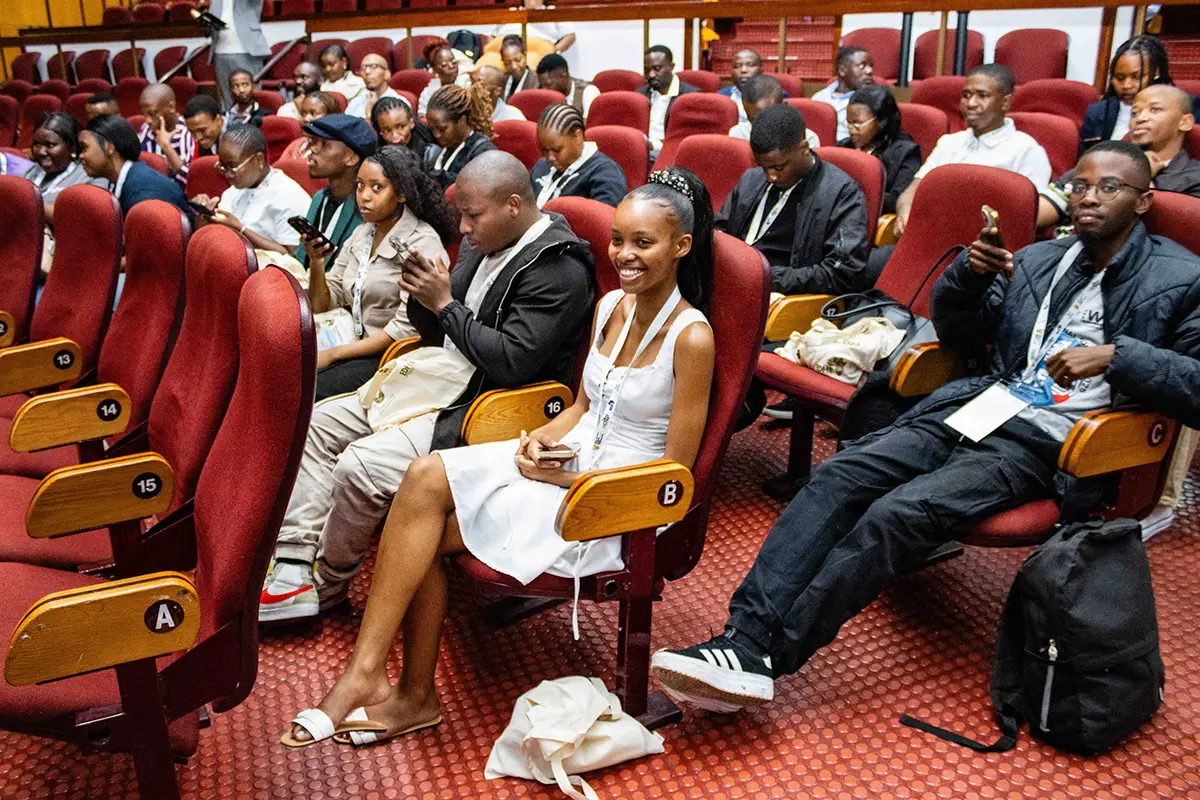
Gallery Images

Join us via the Glue Up conferencing app to receive programme updates and participate in the event.


Introduction to Glue Up
How to Join online event app
Contact Details
2 Days Schedule
Day 1: Studentpreneurs Indaba and Quests - Monday, 6 October 2025
Date: Monday, 6 October 2025
Students will arrive from their various regions on the morning of the first day of the Studentpreneurs Indaba. They will arrive at UNISA and register for the Indaba and leave their bags at a secure facility, where they will be collected at the end of the day to then check-in at their respective hotels. Students will receive a lunch pack on arrival along with their conference pack.
The activities on the first day are as follows:
Amazing Race
To make room for any logistical delays arriving at the venue, students who arrive in the two-hour registration period will participate in an Amazing Race across the UNISA campus with actions at each of the venues to be utilised throughout the Indaba and discovering the campus. This will be a self-guided race with a digital instruction map and digital quiz to facilitate check-in at each point.
Design Thinking Bootcamp
Once the majority of students have arrived and checked in, they will be taken through a Design Thinking Bootcamp to share tools on ideation, innovation, problem solving and solution design. The learnings in this session will provide the base for the site visits to startups and corporations in the area.
Quest Visits
A key part of the experience of the Indaba is integrating experiential learning. The students will depart in teams of 15 to 20 Quests located in the Pretoria area where they will learn from founders or team leaders on business principles, innovation and sustainability, expanding on their bootcamp insights. The quest will be paired with a digital form each team needs to complete for their quest. Each quest team will leave with an EDHE/ USAf/ UNISA staff member or volunteer to help coordinate and support the logistics and site visit.
Student Networking Event
Upon returning from the quests, students will have a working dinner where they share their learnings and network with each other. The networking event will be designed and led by the Studentpreneurs Community of Practice.
Day 2: Studentpreneurs Indaba
The second day of the Indaba provides the students with an opportunity to bring their contributions to the fore.
Plenary Session
The opening session is designed to be inspirational and interactive with two short opening addresses from EDHE and key stakeholders and a keynote from an entrepreneur who has graduated from a South African university and can share their journey from student to founder. The keynote is followed by a Q&A session to allow students to engage with the speaker.
Parallel Sessions
These streams facilitate the contribution of students to the discourse on sustainability for entrepreneurship. Allowing them to showcase their thoughts, apply their lived context, share solutions, and key considerations to co-create an inclusive, dynamic and supportive entrepreneurial ecosystem that connects with students.
Parallel Sessions
These streams facilitate the contribution of students to the discourse on sustainability for entrepreneurship. Allowing them to showcase their thoughts, apply their lived context, share solutions, and key considerations to co-create an inclusive, dynamic and supportive entrepreneurial ecosystem that connects with students.
Session 1 – 4IR, AI & Digitisation
Session 2 – Green, Blue & Circular Economy
Session 3 – Trade & Markets
Session 4 – Entrepreneurial Universities
Session 5 – Innovation and Commercialisation
Session 6 – Rural & Township Entrepreneurship Ecosystems
Session 7 – StartUp Funding