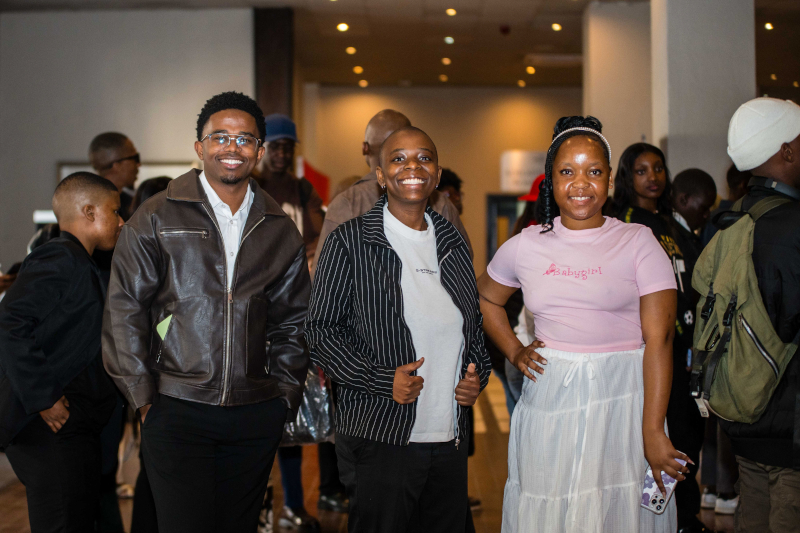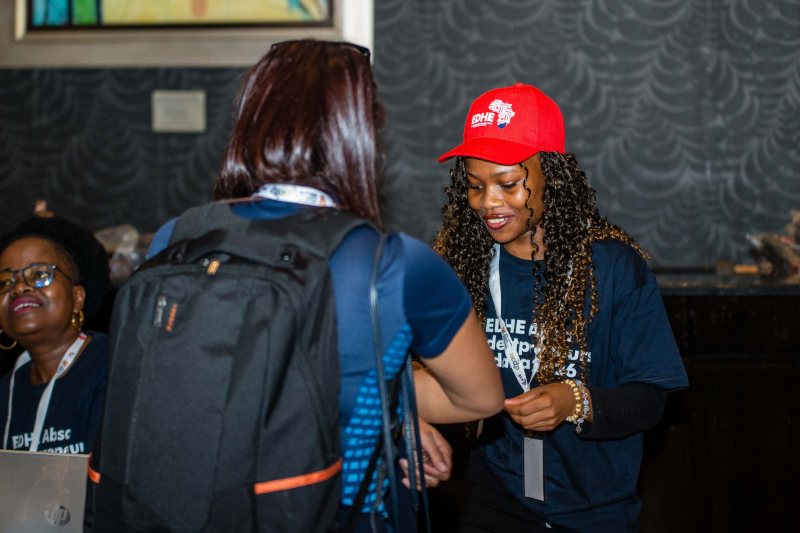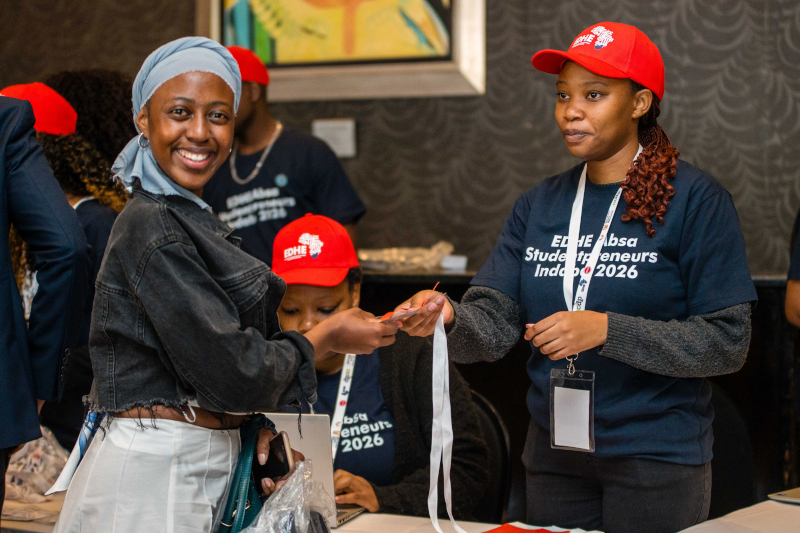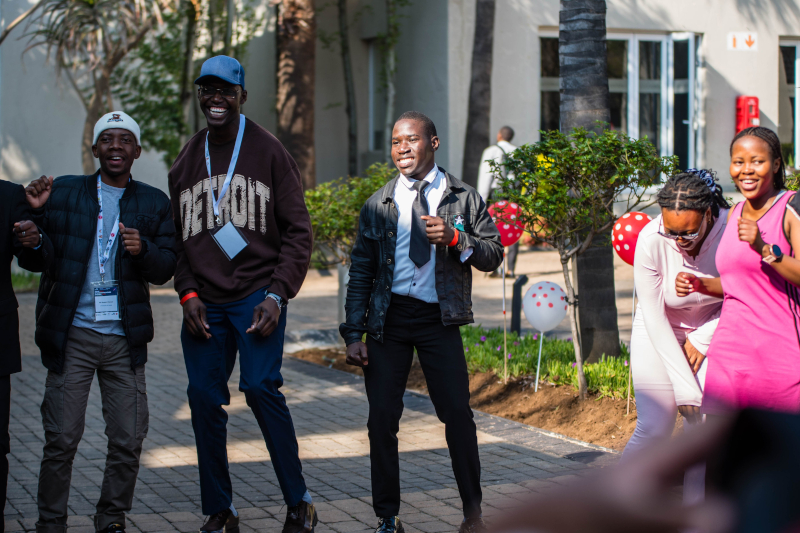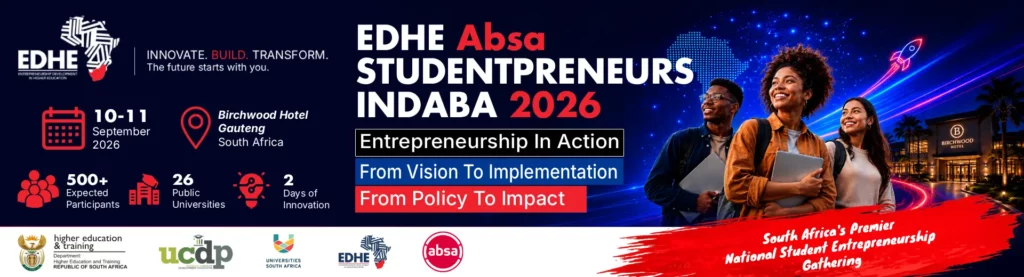
EDHE ABSA Studentpreneurs Indaba 2026

9 – 11 September 2026 | Cape Town, South Africa
Hosted by Universities South Africa (USAf) through the EDHE Programme

“Entrepreneurship in Action: From Vision to Implementation. From Policy to Impact.”

9th

Annual Edition

500+

Expected Participants

26

Public Universities

3

Days of Innovation

South Africa’s Premier National Student Entrepreneurship Gathering empowered by Absa

The EDHE Absa Studentpreneurs Indaba 2026 serves as a flagship platform for advancing student entrepreneurship, innovation, and collaboration across South Africa and the African continent. By integrating knowledge sharing, practical application, and stakeholder engagement, the Indaba contributes to building a dynamic and inclusive entrepreneurial ecosystem that supports youth economic participation and drives sustainable socio-economic development.

South Africa stands at a pivotal economic crossroads. With youth unemployment exceeding 45% and graduate unemployment approaching 30%, the nation urgently requires a fundamental shift, from producing job-seekers to cultivating job-creators. The EDHE Absa Studentpreneurs Indaba 2026 is South Africa’s most significant national platform dedicated to making this transformation a reality.

Now in its 9th edition and presented under the theme “Entrepreneurship in Action: From Vision to Implementation. From Policy to Impact,” the 2026 Indaba will convene more than 500 participants across three transformative days in Cape Town from 9 – 11 September 2026. Hosted by Universities South Africa (USAf) through the Entrepreneurship Development in Higher Education (EDHE) Programme, in strategic partnership with Absa Group, and cohosted by the University of Cape Town, this event represents the apex of South Africa’s university entrepreneurship ecosystem.

USAf is supported by the Department of Higher Education and Training (DHET), through the University Capacity Development Programme and through EDHE and its initiatives continues to strengthen student entrepreneurship ecosystems across South Africa’s 26 public universities. As a strategic stakeholder in advancing entrepreneurship across higher education institutions (HEIs), EDHE adopts a people centred approach to developing the entrepreneurial capacity of students, academics, and institutional leaders. This aligns with the expansion of the programme’s work through the following goals:

  1. Equip every student and graduate for economic participation through entrepreneurial activity, with a particular emphasis on student women through the Student Women Economic Empowerment Programme (SWEEP).
  2. Support academics across disciplines to advance entrepreneurship through teaching, learning, and research.
  3. Strengthen universities as entrepreneurial and innovative ecosystems, including the development of relevant policies and institutional frameworks.

Why This Event Matters

  • South Africa’s 26 public universities enrol over one million students – a vast, untapped pool of entrepreneurial potential.
  • The EDHE Programme has directly supported student entrepreneurship across all 26 institutions over the past decade and the Indaba builds on the success of previous initiatives that have fostered entrepreneurship, innovation, and collaboration across the higher education sector.
  • Previous Indabas have directly influenced institutional policy, seeded new ventures, and created measurable investment pathways.
  • The 2025 Indaba attracted 466 participants from over 76 institutions across South Africa, Lesotho, Zambia, and Tanzania – demonstrating significant continental reach.

Co-Host

The co-hosting university for the 2026 Studentpreneurs Indaba is the University of Cape Town (UCT) in Cape Town. This proposed partnership leverages the strong entrepreneurship ecosystem within the institution, as well as the City of Cape Town, including active student entrepreneurship programmes, innovation hubs, and industry linkages. The collaboration aligns with the Indaba’s thematic focus areas of digital transformation, financial inclusion, sustainability, leadership, and women in enterprise. UCT has demonstrated strengths in research, innovation, and enterprise development within these domains. UCT as the host university presents an opportunity to strengthen regional collaboration and position the Western Cape as a hub for student entrepreneurship and innovation on the continent.

South Africa faces a structural unemployment crisis that conventional job-creation strategies alone cannot resolve. South Africa’s 26 public universities are uniquely positioned as engines of economic transformation. They are simultaneously talent incubators, research hubs, and community anchors. When universities actively embed entrepreneurship into their cultures and curricula, students graduate not merely as job-seekers but as economic architects capable of building the enterprises that employ others.

The EDHE Programme, operating since 2015, has catalysed a profound shift in how South African universities approach entrepreneurship, moving from elective add-ons to institutional strategic priorities. The Indaba is the programme’s annual flagship platform, where theory meets practice and policy meets implementation. The purpose of the Indaba is therefore to empower, enable, and equip this generation to recognise and embrace their roles as innovators, entrepreneurs, leaders, academics, researchers, changemakers, and thought leaders. While the programme aims to share knowledge and inspire students, it equally seeks to gather insights from students to better understand and shape the entrepreneurial university ecosystem.

The Ecosystem Challenge

  • Fragmented support: Student ventures often struggle to access coordinated support across incubation, funding, and mentorship.
  • Policy-practice gap: Institutional entrepreneurship policies frequently do not translate into lived student experience.
  • Investor access: Student entrepreneurs face structural barriers to early-stage investor engagement.
  • Research commercialisation: South Africa’s IP and research outputs are significantly under-commercialised relative to global benchmarks.
  • Gender disparity: Women entrepreneurs in the student ecosystem remain underrepresented in high-growth tech and fintech sectors.

The Opportunity

These challenges represent precisely the landscape within which the EDHE Absa Studentpreneurs Indaba operates. Each year, the event actively bridges these gaps, connecting student founders with investors, linking institutional policy with practitioner insight, and creating tangible entrepreneurship outcomes that persist long after the event ends.

“Universities that treat entrepreneurship as a strategic priority produce graduates who create wealth, not just seek it.”

Contact Details

Impact and Reach

The EDHE Studentpreneurs Indaba has been hosted annually since 2018, growing consistently in reach, quality, and national significance. The 2025 edition delivered the following outcomes highlighted below.

466

Participants in 2025

76+

Institutions

Represented

4

Countries Participated

8th

Consecutive Editions

Key components of the Indaba

Day 1: Fintech Hackathon (24 hours)

  • A 24-hour hackathon focused on developing financial solutions for SMEs.
  • Includes pre-event onboarding sessions and masterclasses on problem identification, ideation, MVP design, and coding solutions.
  • Students work in teams across institutions to develop scalable solutions addressing challenges such as access to finance, payments, data analytics, and market connectivity.
  • Hosted at an Absa or university campus, encouraging cross-institutional collaboration and practical problem-solving.

Day 2: Conference, Pitch Festival and Exhibitions (09:00 – 16:30)

• A structured conference programme featuring keynote addresses, panel discussions, and breakaway sessions. Focus on thought leadership and dialogue at the intersection of entrepreneurship, innovation, and higher education.
• Pitching sessions where hackathon teams and student entrepreneurs present their solutions to investor panels, including angel investors and venture capital representatives.
• Exhibition space and platform showcasing student businesses, innovations, and industry partners.
• Interactive engagements including technology demonstrations, founder conversations, and experiential learning activations.
• Opportunities for feedback, funding pathways, and industry exposure.

Day 3: Conference and Exhibitions (09:00 – 16:30)

• Continued structured conference programme featuring ignite talks (10 – 15-minute key notes), panel discussions, and breakaway sessions.
• Continued exhibition engagement alongside formal knowledge-sharing platforms.
• Focus on thought leadership and dialogue on entrepreneurship and innovation, research commercialisation and financial inclusion, in the context of the higher education sector.
• Integrated networking sessions to foster collaboration among students, academia, and industry stakeholders

Participation and Access

The Indaba is designed as a free and inclusive platform to ensure equitable participation across all university students. Each institution will be allocated student tickets, while additional participants may apply independently through an online process, with tickets for sale for staff and industry attendees. Participant data, including demographic and institutional information, will be collected to ensure diversity, inclusivity, and balanced representation. Participation in components such as the hackathon will also be informed by these criteria.

Students currently in the EDHE community will be registered through their EDHE Studentpreneur Coordinator. Tickets for the public will be made available on a booking platform.

3 Days Schedule

The 2026 Indaba programme is a revamp of the success of the 2025 Indaba and draws inspiration from the world’s leading entrepreneurship festivals, combining insightful conversation, meaningful dialogue, practical learning, high-stakes pitching, curated networking, and media-worthy moments. Each day has a distinct identity, energy, and purpose.