
2026
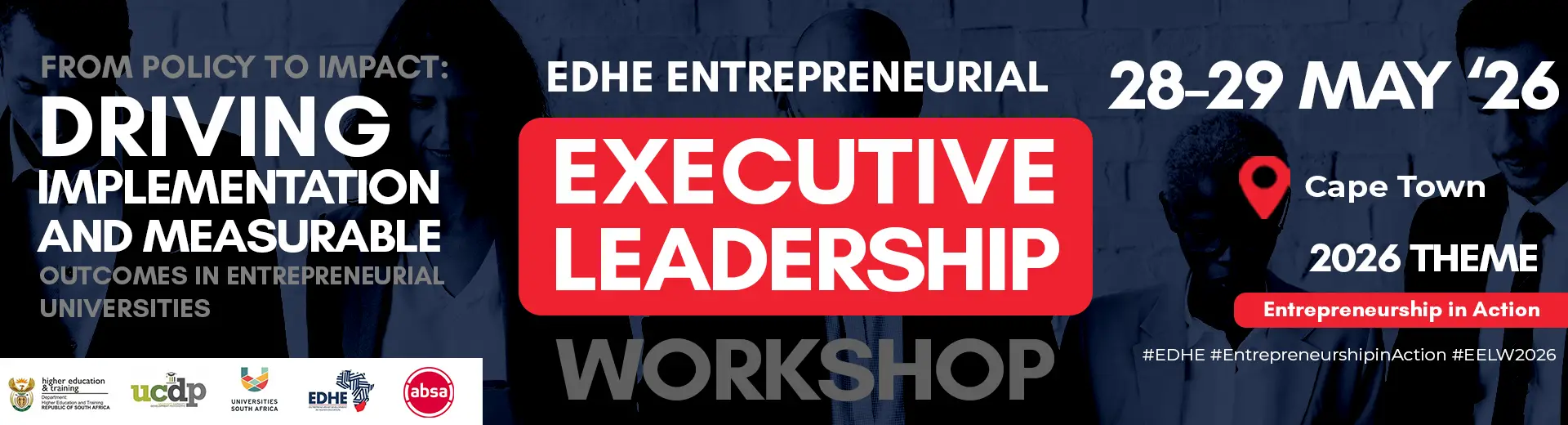
Entrepreneurial Executive Leadership Workshop
The Entrepreneurship Development in Higher Education (EDHE) programme, implemented by Universities South Africa (USAf) in partnership with the Department of Higher Education and Training (DHET), continues to play a catalytic role in transforming South Africa’s 26 public universities into entrepreneurial and innovation driven institutions.
The Entrepreneurial Executive Leadership Workshop (EELW) forms a critical leadership intervention within EDHE, targeting university senior executives responsible for embedding entrepreneurship across teaching, learning, research, and institutional strategy.
The EELW 2026 represents a critical inflection point from building awareness and frameworks to driving measurable institutional transformation.
By focusing on implementation, scale, and impact, the EELW will position university leadership to move beyond intention and towards demonstrable outcomes that shape South Africa’s entrepreneurial future.
The Entrepreneurial Executive Leadership Workshop (EELW) forms a critical leadership intervention within EDHE, targeting university senior executives responsible for embedding entrepreneurship across teaching, learning, research, and institutional strategy.
Historically, the EELW has provided a platform for engaging university leadership on critical themes shaping the development of entrepreneurial universities. Across previous iterations, the EELW has focused on strengthening innovation pipelines, embedding entrepreneurship across disciplines, and positioning universities as key agents of social and economic transformation. These engagements have highlighted several recurring insights, including the evolving role of universities as drivers of societal impact, the imperative to institutionalise entrepreneurship beyond fragmented and siloed initiatives, and the importance of cross-disciplinary integration anchored in real world problem solving. At the same time, persistent systemic constraints have been identified, notably bureaucratic inefficiencies, weak ecosystem coordination, and limited approaches to measuring impact.
Building on these insights, the EELW continues to serve as a strategic platform for aligning institutional leadership with EDHE’s core pillars, namely student entrepreneurship, entrepreneurship in teaching, learning and research, and the broader institutionalisation of entrepreneurial universities.
These insights point to a critical need for a stronger focus on implementation, scalability, and measurable outcomes across the higher education sector.
Building on these insights, the 2026 EELW is anchored on the theme “From Policy to Impact: Driving Implementation and Measurable Outcomes in Entrepreneurial Universities.” This theme reflects a deliberate strategic shift within the EDHE programme, from a strong focus on policy development, frameworks, and conceptual alignment towards a sharper emphasis on execution, scalability, and demonstrable impact. While previous engagements concentrated on advancing the discourse around social innovation and the role of universities in societal transformation, the 2026 focus recognises that meaningful progress now depends on the ability of institutions to translate these commitments into tangible outcomes.
Accordingly, the theme foregrounds the need for universities to operationalise entrepreneurship strategies, embed them systemically across teaching, learning, and research, and establish robust mechanisms for measuring impact beyond participation metrics. It further emphasises leadership accountability in driving implementation, strengthening institutional capability, and ensuring that entrepreneurial initiatives contribute directly to graduate employability, enterprise creation, and broader socio-economic development. In this regard, the EELW 2026 positions itself as a critical platform for advancing a results oriented, evidence-based approach to building entrepreneurial universities within the South African higher education system.
Despite the progress outlined above, a critical gap remains between policy intent and demonstrable impact across the higher education sector. While universities have made significant strides in aligning conceptually with entrepreneurship and developing supporting frameworks, implementation remains uneven and often fragmented. Many initiatives continue to operate without full institutional integration, limiting their scalability and reducing their ability to generate meaningful and measurable outcomes.
Furthermore, there has been insufficient emphasis on execution capability, leadership accountability, and systematic performance tracking. As a result, the sector has yet to fully realise the potential of entrepreneurship as a driver of graduate employability, enterprise development, and broader socio-economic transformation.
In response, the 2026 EELW deliberately shifts the focus from “why” and “what” to a more action-oriented emphasis on “how” to implement, scale, and measure impact. This shift reflects EDHE’s evolution into a system-level driver of measurable transformation, positioning the programme to support universities not only in shaping entrepreneurial strategies, but in delivering tangible and sustained outcomes.
To equip university executive leadership with practical strategies, frameworks, and tools to drive implementation, scale entrepreneurship initiatives, and measure impact within their institutions and ecosystems.
The EELW 2026 will focus on three core objectives that respond directly to the sector’s current needs and EDHE’s shift towards measurable impact:
- Strengthen institutional implementation capability
Equip university leadership with approaches to translating entrepreneurship and innovation strategies into actionable institutional plans, with clear roles, governance alignment, and accountability mechanisms. This includes strengthening execution across the full innovation pipeline from ideation and research to commercialisation and enterprise development supported by appropriate institutional structures and leadership oversight.
- Advance the institutionalisation and integration of entrepreneurship and commercialisation
Support universities in embedding entrepreneurship and innovation across teaching, learning, research, and support structures, including research commercialisation and technology transfer functions. The objective is to enable a coordinated, institution wide ecosystem that links academic activity with innovation outputs, industry engagement, and the development of commercially viable solutions.
- Enhance impact measurement and accountability systems
Introduce tools and frameworks to measure entrepreneurship and innovation outcomes, including venture creation, commercialisation outputs, and graduate economic participation. This includes integrating these indicators into institutional KPIs, reporting systems, and performance management processes to strengthen accountability and support evidence-based decision-making
The EELW 2026 will focus on a set of interrelated thematic areas designed to support universities in moving from strategy to implementation, while strengthening institutional impact and accountability.
- From Strategy to Implementation
Exploring how universities can translate entrepreneurship policies and frameworks into actionable institutional plans, with a focus on governance, leadership roles, and execution pathways.
- Embedding Entrepreneurship Across the Institution
Focusing on integrating entrepreneurship into curricula, research, and co-curricular activities, ensuring alignment across faculties and support structures.
- Building Scalable Entrepreneurial Ecosystems
Examining how universities can strengthen and connect internal and external ecosystem components, including incubators, Economic Activation Offices, industry, and community partnerships.
- Measuring Impact and Driving Accountability
Introducing approaches to track meaningful outcomes such as venture creation, graduate economic participation, and societal impact, while embedding these into institutional performance systems.
- Leadership for Institutional Transformation
Highlighting the role of executive leadership in driving change, overcoming bureaucratic constraints, and fostering a culture that supports innovation and entrepreneurship.
- Research Commercialisation and Industry Linkages
Focus on translating research and innovation into commercially viable outputs, including intellectual property development, spinouts, and industry partnerships. This theme will explore the role of Technology Transfer Offices (TTOs), mechanisms for accelerating commercialisation pipelines, and strategies for strengthening university-industry collaboration to drive economic and societal impact
The EELW 2026 is designed for senior university executives with responsibilities for driving innovation and entrepreneurship within their institutions, as well as key stakeholders operating at the interface of academia and the broader ecosystem. The target audience would typically comprise Vice Chancellors, Deputy Vice Chancellors responsible for Research and Innovation, as well as Teaching and Learning, together with Deans and Deputy Deans who play a critical role in embedding entrepreneurship within faculties. It may also extend to Directors of Entrepreneurship, Innovation, and Technology Transfer Offices (TTOs), alongside representatives from industry and private sector partners, recognising the importance of strengthening university-industry linkages. In addition, senior managers responsible for entrepreneurship development, incubation, and ecosystem coordination would be well positioned to participate, given their role in operationalising institutional strategies and driving implementation at scale.
The EELW 2026 will be delivered as a structured, high-level executive engagement designed to integrate thought leadership, peer learning, and practical application. The workshop will feature keynote addresses that provide strategic insights on implementation and impact, complemented by leadership panel discussions involving senior institutional leaders to share experiences and lessons from practice. In addition, case study presentations will be used to showcase scalable models and demonstrate effective approaches to embedding entrepreneurship within universities.
The format will further emphasise peer learning and strategic dialogue, enabling participating institutions to exchange perspectives, reflect on their own contexts, and identify opportunities for collaboration. Importantly, the workshop will be outcome-oriented, with a focus on generating actionable insights and institutional commitments that support the implementation, scaling, and measurement of entrepreneurship initiatives across the higher education sector.
The EELW 2026 is expected to deliver a set of tangible and strategically aligned outcomes that support the transition from policy formulation to effective implementation across the higher education sector.
Firstly, the workshop will contribute to the development of a shared national understanding of implementation pathways for entrepreneurial universities, enabling institutions to move beyond conceptual alignment towards coordinated and contextually relevant execution. This will foster greater coherence across the sector in how entrepreneurship and innovation are embedded and operationalised.
Secondly, participating institutions will be supported to develop practical action plans that translate workshop insights into implementable priorities. These plans are expected to reflect institutional contexts while aligning with broader EDHE objectives, thereby strengthening the capacity of universities to scale entrepreneurship and innovation initiatives in a structured and sustainable manner.
Thirdly, the workshop will advance a more refined approach to impact measurement, aligned with EDHE priorities. This includes the identification and adoption of indicators that capture meaningful outcomes such as venture creation, research commercialisation, graduate economic participation, and broader societal impact, thereby enabling institutions to track progress and demonstrate value more effectively.
In addition, the EELW 2026 will strengthen leadership alignment and accountability by fostering a shared commitment among senior university executives to drive implementation within their respective institutions. This is expected to enhance decision making coherence, improve coordination across institutional units, and reinforce the role of leadership in championing entrepreneurship and innovation.
Finally, the workshop will facilitate enhanced collaboration across institutions and ecosystems by creating opportunities for strategic dialogue, peer learning, and partnership development. This includes strengthening linkages between universities, industry, government, and other stakeholders, thereby contributing to more integrated and responsive entrepreneurial ecosystems that support innovation and economic development.
Gallery



Videos
Workshop Dates
Day1: Thursday 28 May 2026
Day 2: Friday 29 May 2026
Venue: Western Cape
Contact Details

Latest News 2026

How the 2026 Entrepreneurial Leadership Workshop Is Transforming SA’s 26 Universities
Zanelle Scott2026-06-12T08:18:21+00:00June 11th, 2026|
Cape Town – When Dr Phethiwe Matutu, CEO of Universities South Africa, took the stage at the recent Entrepreneurial Executive Leadership Workshop (EELW) 2026, she delivered a direct yet powerful message: entrepreneurship is no longer ...
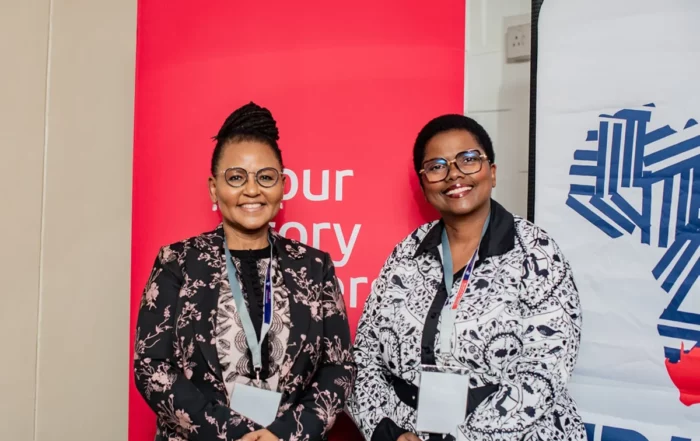
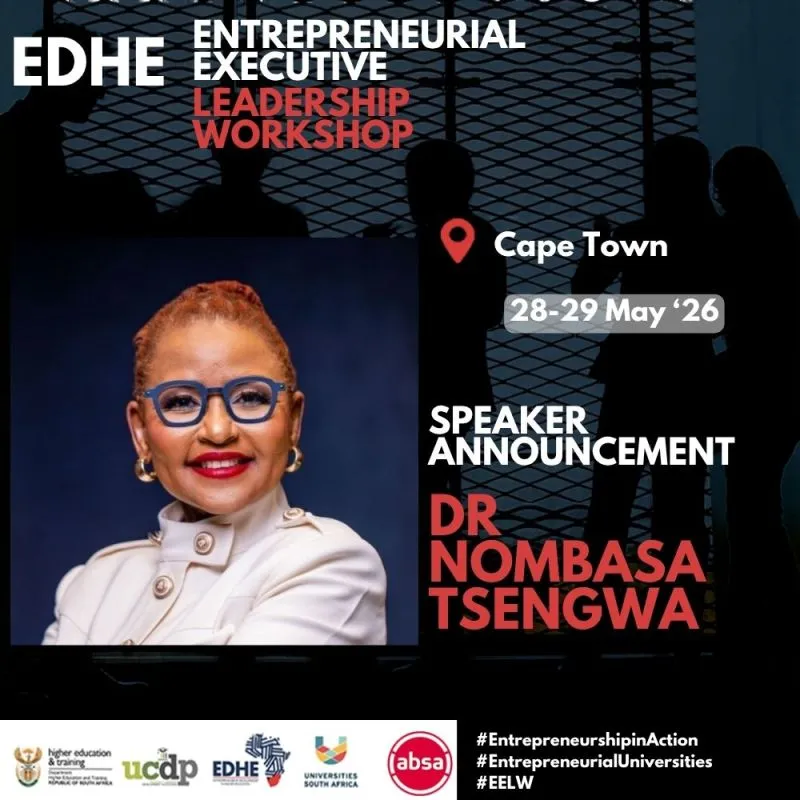
Dr Nombasa Tsengwa’s Perspective on University-Industry Alignment and Talent Preparedness
Zanelle Scott2026-06-12T08:34:43+00:00June 11th, 2026|
South Africa’s higher education system is facing a growing emergency as universities continue to produce graduates faster than the economy can absorb them, and industry leaders are warning that the gap between education and ...
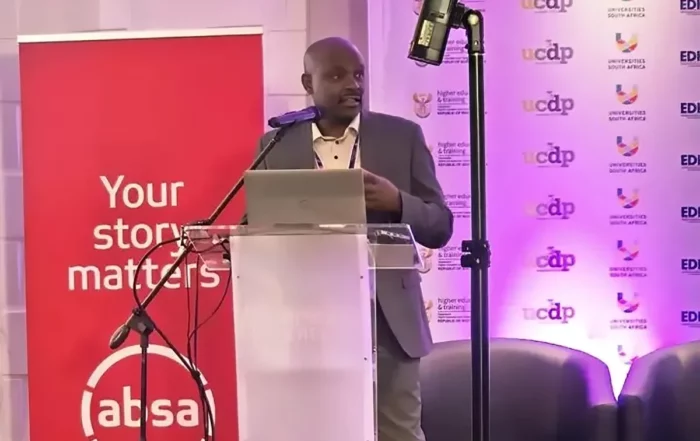
Kenya’s Innovation Model Offers Blueprint for Universities Driving Economic Growth
Zanelle Scott2026-06-12T08:32:01+00:00June 11th, 2026|
Kenya's approach to building a national innovation system is placing universities at the centre of economic transformation, with lessons that could inform strategies for higher education institutions across diverse African and global contexts, to ...
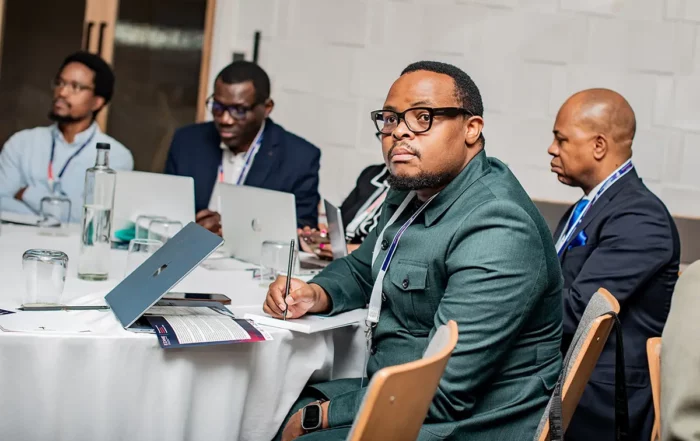
The Policy to Performance Executive Workshop on Driving Real-World Outcomes in Entrepreneurial Education is underway
V4CWebAdmin2026-05-28T13:18:49+00:00May 28th, 2026|
CAPE TOWN – Today, 28 May, marked the commencement of the highly anticipated Entrepreneurial Executive Leadership Workshop 2026 – a high-stakes gathering poised to reshape the future of higher education across South Africa and ...

From Policy to Impact: University Leaders Convene to Drive Entrepreneurial Transformation in Higher Education
Zanelle Scott2026-05-19T13:22:25+00:00May 18th, 2026|
In May 2026, the Entrepreneurship Development in Higher Education (EDHE) programme will bring together senior university leadership, government stakeholders, and industry partners in Cape Town for the highly anticipated Entrepreneurial Executive Leadership Workshop (EELW) ...