
Cape Town – When Dr Phethiwe Matutu, CEO of Universities South Africa, took the stage at the recent Entrepreneurial Executive Leadership Workshop (EELW) 2026, she delivered a direct yet powerful message: entrepreneurship is no longer a peripheral activity but the central lens for teaching, research, and community engagement. Beside her, Mr Mahlubi, Chief Mabizela, Director of Operations and Sector Support at Universities South Africa, set a tone of disciplined leadership as Master of Ceremonies, reminding delegates, “This is a leadership room and over the next two days, leadership in action will matter most.” And behind the scenes, Dr Edwell Gumbo, Director of Entrepreneurship at Universities South Africa, had spent months architecting a vision to transform entrepreneurial intent into tangible student impact across all 26 public universities.
The result was the most consequential EELW to date, a workshop that decisively pivoted from discussion to implementation, from policy to measurable outcomes.
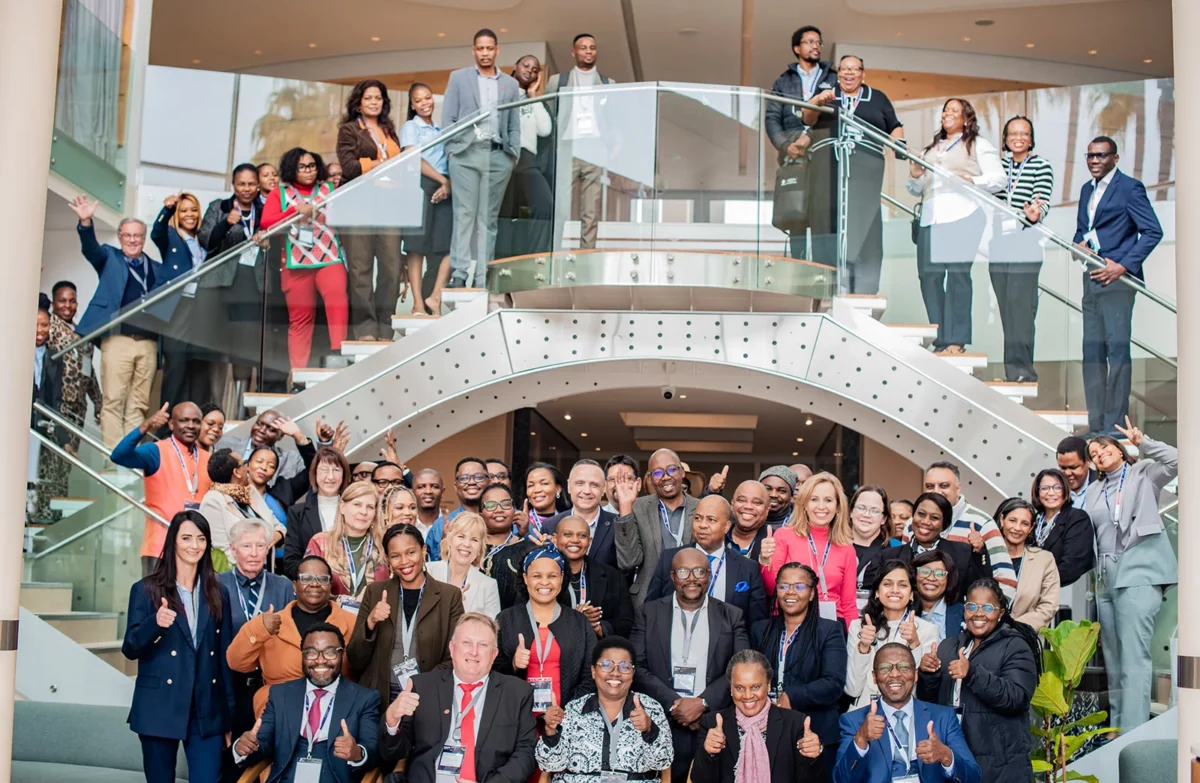
Participants at the 2026 EDHE Entrepreneurial Leadership Workshop 2026
Funder Support Powers National Transformation
The Entrepreneurship Development in Higher Education (EDHE) programme, implemented by Universities South Africa (USAf) in partnership with the Department of Higher Education and Training (DHET), continues to play a catalytic role in transforming South Africa’s 26 public universities into entrepreneurial and innovation-driven institutions. As the primary funder and strategic partner, DHET has provided the sustained backing necessary to move beyond pilot projects toward systemic reform. This support enabled the 2026 workshop to address head-on the inefficiencies, weak ecosystem coordination, and limited impact metrics identified in previous years.
Global Benchmarking Inspires New Thinking
International expertise brought a fresh perspective. Dr Tonny Omwansa, CEO of the Kenya National Innovation Agency, shared how East Africa’s startup resurgence occurred when Kenya stopped asking “what does the policy say?” and started asking “what does the market need?” He challenged South African universities to embrace innovation optimally by enabling students to test business ideas without bureaucratic delays. Prof Ceri Nursaw, CEO of the National Council for Entrepreneurship Education (NCEE UK), added a global observation: “Universities are great at starting things and limited at sustaining them.” These insights helped delegates see that while challenges are universal, South Africa has a clear pathway to becoming a leader in entrepreneurial education.
Industry Leaders Build Real-World Pipelines
Private sector partners demonstrated their commitment to moving beyond rhetoric. Mr Basson of Absa Group reinforced that industry partnerships must be intent-driven: “We are here to build pipelines. A student with a prototype needs a pathway to market, not just a pitch competition.” Mr Octavius Phukubye, Executive Director of the Mr Price Foundation, offered the most direct industry verdict: “We don’t need more business plans; we need more paying customers.” Ms Tandokazi Nquma-Moyo of the Technology Innovation Agency (TIA) identified the critical obstacle known as the “valleys of death”, the gap between proof of concept and marketable product, and outlined practical bridging strategies. Dr Nombasa Tsengwa, former CEO of Exxaro Resources, urged the infusion of agility and entrepreneurial thinking across entire faculties, not just within business schools.
Higher Education Leaders Step Up with Actionable Strategies
University executives delivered the practical approaches that turned inspiration into implementation. A highlight was the DVC Leadership Panel on Execution, chaired by Prof Eugene Cloete (CEO, Cape Higher Education Consortium). Prof Simphiwe Nelana (VUT) spoke about embedding entrepreneurship into technical curricula: “Our students are makers. We need to teach them how to sell what they make.” Dr Aldo Stroebel (UMP) cautioned against “policy piles” that gather dust, stating, “Execution is the only currency that matters.” Prof Bulelwa Nguza-Mduba (UFS) called for breaking down silos: “To foster an entrepreneurial environment, we must integrate entrepreneurial thinking into all departments.”
In a Technology Transfer Masterclass, Ms Anita Nel (Director, Innovus, Stellenbosch University) offered a powerful metaphor: “Most universities sit on a goldmine of IP but lack the pickaxe of commercialisation strategy.” She provided a practical framework for turning research assets into revenue-generating ventures.
Communities of Practice (CoPs) sessions, chaired by Prof McEdward Murimbika (Director, Wits Centre for Entrepreneurship), featured honest critiques that opened the door to genuine reform. Prof Evelyn Derera (UKZN) challenged her peers: “We publish papers on SMMEs, but we never start one.” Prof Rendani Maladzhi (DUT) shifted the conversation from academic outputs to economic outcomes, warning, “Without impact metrics, policy is merely poetry. We measure how many papers we publish on SMEs, but we don’t measure how many SMEs we actually create.”
Key Deliverables for the 26 Universities
By the workshop’s close, concrete outcomes had emerged:
- Accountability metrics for measuring entrepreneurial outputs complementing academic publications
- Cross-university partnerships to break down silos of innovation
- Industry pipelines connecting student prototypes to market pathways
- Policy reforms embracing innovation for students
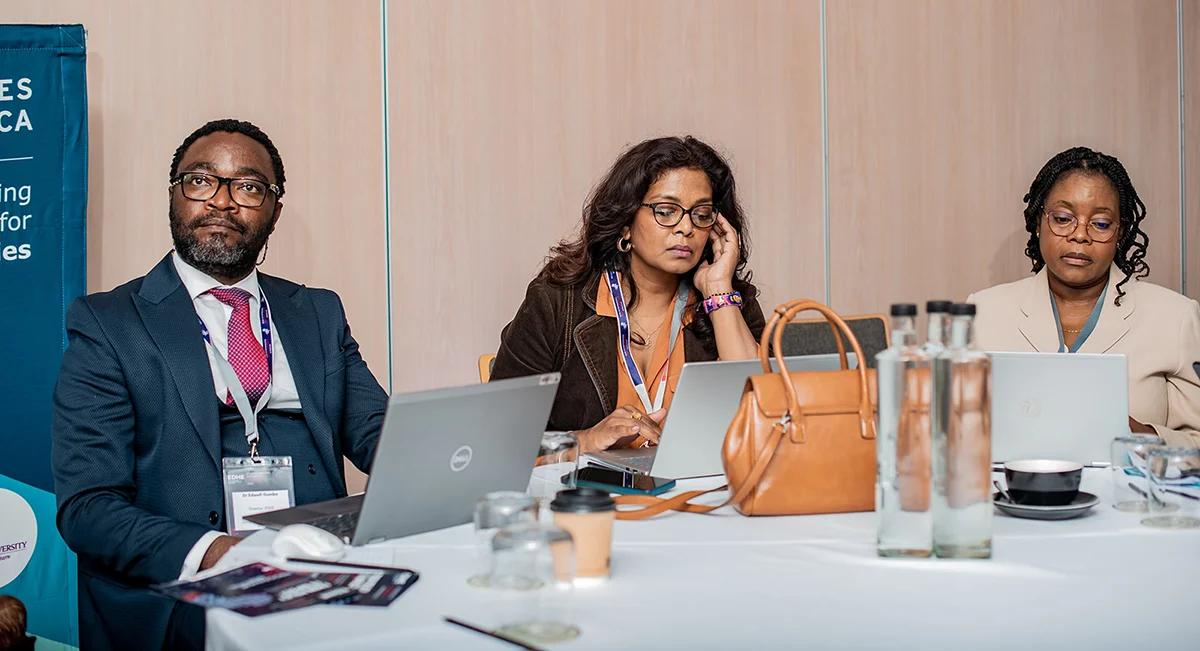
EEL Workshop 2026 – Dr Gumbo with Delegates.
A New Beginning
As delegates stepped out into the Cape winter sunshine, the feeling was not one of an ending but of a new beginning. Dr Edwell Gumbo’s closing words captured the moment perfectly: “We have spent two days moving from policy to impact. But the real work begins on Monday morning. The question is not about inspiration; it’s about what you will implement.”
With the funder’s support, international benchmarks, industry pipelines, and committed higher education leaders now aligned, South Africa’s 26 universities have never been better positioned to turn entrepreneurial vision into economic and social reality.
written by Gcina Nhleko (APR) – Corporate Communications Manager at Universities South Africa (USAf.