
Building an entrepreneurial generation does not begin with a business plan. It begins in a classroom, with a teacher who knows how to create the conditions for curiosity, creativity and problem-solving. That was the animating idea behind the Entrepreneurship Development in Higher Education (EDHE) train-the-trainer workshop, held from 9 to 11 June 2026 at The Centurion Hotel in Pretoria.
While the broader vision for entrepreneurship education had been set, the workshop turned decisively to the practical question: how do universities actually embed entrepreneurial competencies into the preparation of future teachers? The answer, participants discovered, begins with experiencing those competencies themselves.
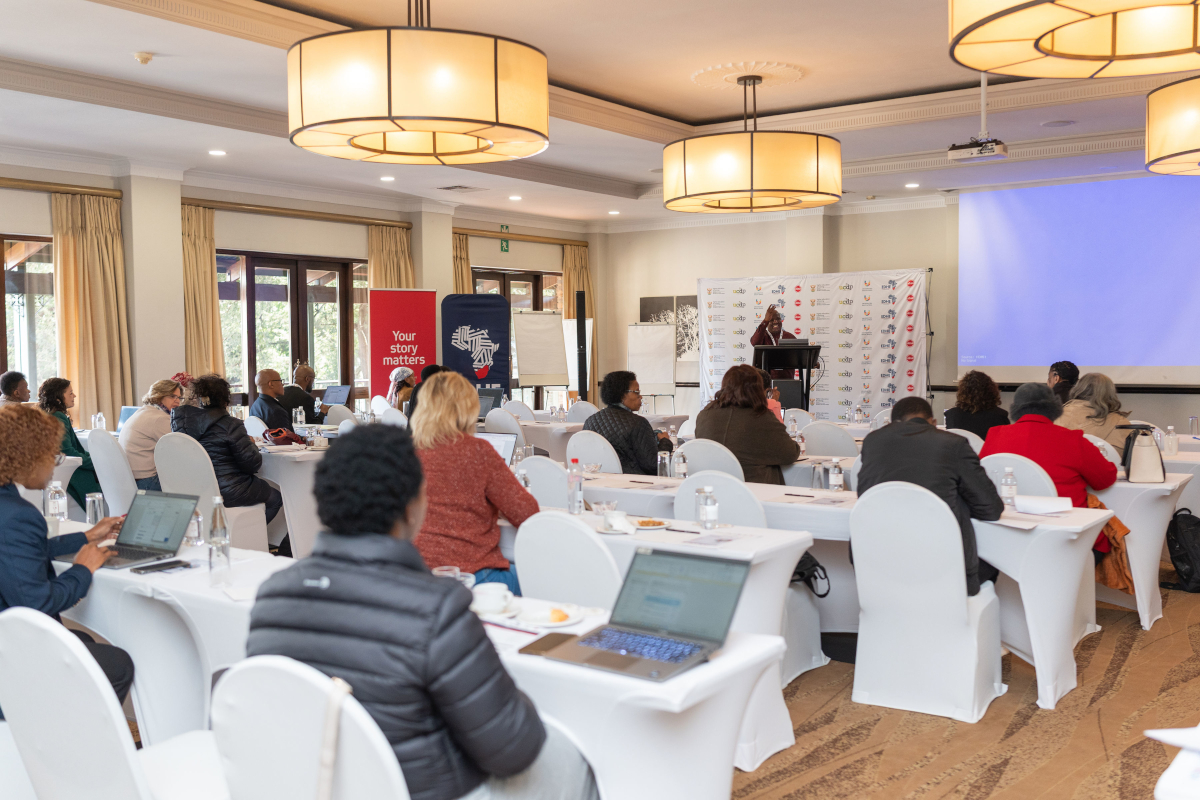
Participants of the workshop
A workshop that works
The practical sessions were led by Prof Melodi Botha, Project Lead, University of Pretoria , who made her expectations clear from the start. “This is a workshop, so I am really going to make you work. It is not going to be I talk, you listen, you catch up on emails. We are really going to work together,” she told participants.
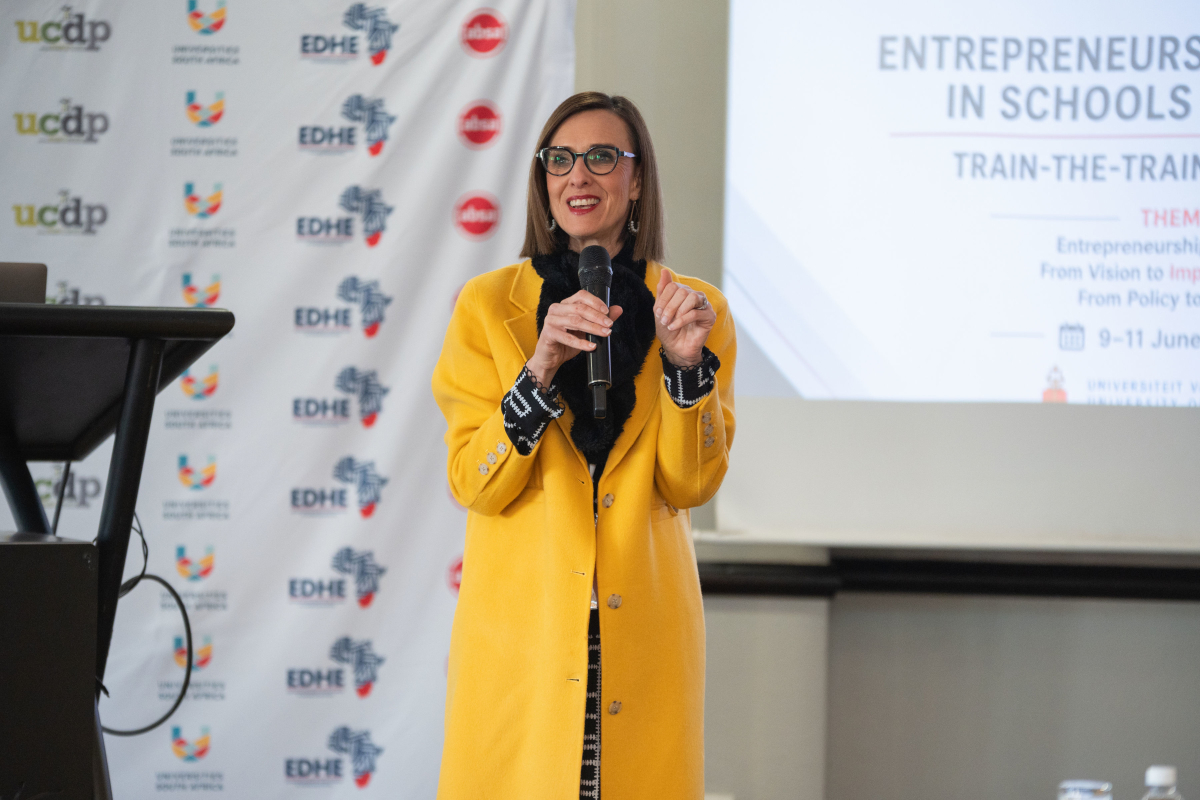
Prof Melodi Botha, Project Lead, University of Pretoria
This was deliberate. The workshop was designed as a train-the-trainer process, meaning participants would first experience the learning activities as learners before reflecting on how to teach and adapt them within their own institutional contexts. “We are going to experience it from both sides,” Prof Botha said.
The framework she guided participants through focused on entrepreneurial competency clusters across cognitive, decision-making, resilience and action-based dimensions. These competencies, the workshop made clear, cannot be transmitted through theory alone. “You cannot teach someone and say, right, this is risk-taking. Now you are going to take some risks. It is theory. It does not work. They need to experience it,” Prof Botha said.
The underlying principle was straightforward: entrepreneurial competencies are developed through teaching methodologies, not content delivery. Participants were therefore invited to think about how creativity, innovation, risk-taking and resilience can be woven into existing curricula across different subjects and school phases, from mathematics and natural sciences to languages and social sciences.
Embedding, not adding
A consistent thread throughout the workshop was the distinction between treating entrepreneurship as a standalone subject and genuinely embedding entrepreneurial thinking across the curriculum.
In his remarks, Dr Edwell Gumbo, Director: Entrepreneurship Development in Higher Education (Right), was direct on this point. Entrepreneurship should not be confined to business studies, economics or economic and management sciences. “It must be a way of teaching, a way of learning, a way of being,” he said. The question is not whether entrepreneurship belongs in the curriculum. “The question is how we embed entrepreneurial thinking throughout the curriculum in meaningful and authentic ways.”

Dr Gumbo also framed the workshop within a larger ambition. Rather than producing another document that remains unused, the intention is to build a movement of champions across faculties of education. “This workshop is not about producing another document that sits on the shelves, but it is about building a movement,” he said. Participants were reminded that their presence itself carried significance: “This is the first workshop. So you being here, you are part of history.”
Champions, not just attendees
This framing shaped how participants were positioned throughout the three days. They were not treated as an audience, but as institutional representatives selected to carry the work back into their universities. “You are the champions from your university. You have been selected. You have been sent to represent,” Prof Botha said.
Prof Matshediso Mohapeloa, speaking on behalf of the EDHE Learning and Teaching Community of Practice as the Chairperson, reinforced this responsibility. The Community of Practice, she explained, drives innovation, collaboration and excellence in entrepreneurship teaching and learning across South African universities, guided by a mandate to strengthen teaching practices and foster ecosystem linkages. The workshop, she said, offered an important opportunity to strengthen the pipeline between schooling and higher education by equipping pre-service teachers with the knowledge, tools and pedagogical methodologies needed to cultivate entrepreneurial mindsets earlier in the learner journey.
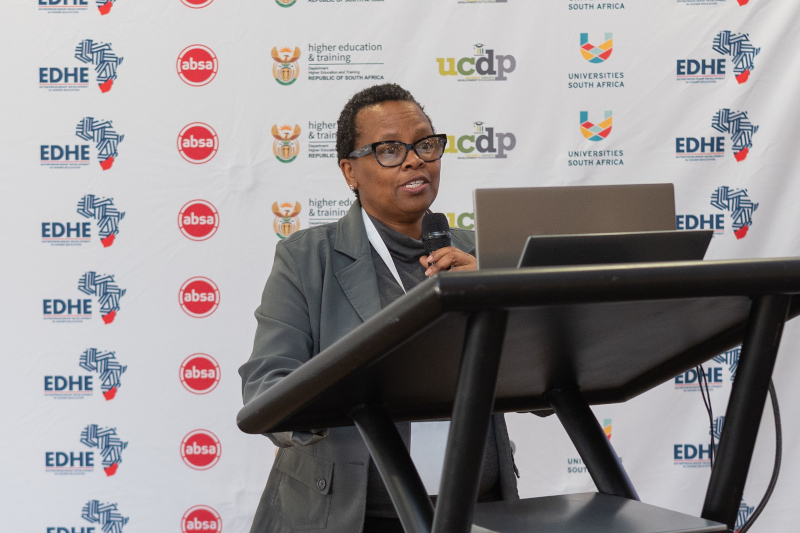
Prof Matshediso Mohapeloa, speaking on behalf of the EDHE Learning and Teaching Community of Practice as the Chairperson
Prof Mohapeloa was also careful to expand what entrepreneurial competencies actually include: creativity, opportunity recognition, problem-solving, resilience, ethical thinking, collaboration, financial literacy, resource mobilisation and the ability to cope with uncertainty and risk. “These are not just business skills, they are human skills,” she said.
In the South African context, where young people are preparing to enter a world marked by volatility, uncertainty and rapid change, this matters enormously. Content delivery alone is no longer sufficient. “As a teacher who only knows how to deliver content from a curriculum, this is no longer enough,” Prof Mohapeloa said. Transformation, she acknowledged, will not happen overnight. “You will not transform overnight, but will transform one champion, one tool, one conversation at a time.”
From training to practice
The workshop also dedicated time to implementation, guiding participants through how the framework could be adapted within their own institutional contexts, considering curriculum structures, potential ecosystem partners and the institutional support required. The approach throughout was grounded in doing rather than theorising. “It’s built on teaching through practice. All experiential learning. It’s not theory,” said Prof Botha.
The train-the-trainer model that underpins the workshop is central to EDHE’s strategy. Rather than attempting to reach every lecturer at every university directly, it equips selected champions who can return to their institutions, engage colleagues and support implementation from within. “You are not just participants. You are multipliers of change,” said Mr Manchidi.
That multiplier effect is precisely what the broader programme hopes to achieve. “If we want classrooms that encourage creativity, problem-solving, initiative, and innovation, then we must ensure that our educators are equipped to facilitate such learning environments,” said Dr Gumbo. For South Africa’s public universities, the workshop offers a practical bridge between policy intention and teaching practice, supporting the development of teacher educators who can create those environments and, through them, teachers who will do the same.
The workshop closed with a clear expectation: participants would not simply understand the framework, they would begin using it. Through this work, EDHE and USAf are helping to build the foundations of entrepreneurship education across the public university sector, one faculty, one champion and one classroom at a time.